
Sports and deep tissue massage on the Sunshine Coast.
Sports massage Sunshine Coast clients book it under several names: sport massage, deep tissue, recovery work. The underlying offering is the same: targeted remedial bodywork with the depth and intensity that hard-working tissue actually needs. ANTA-registered, health fund rebate eligible.
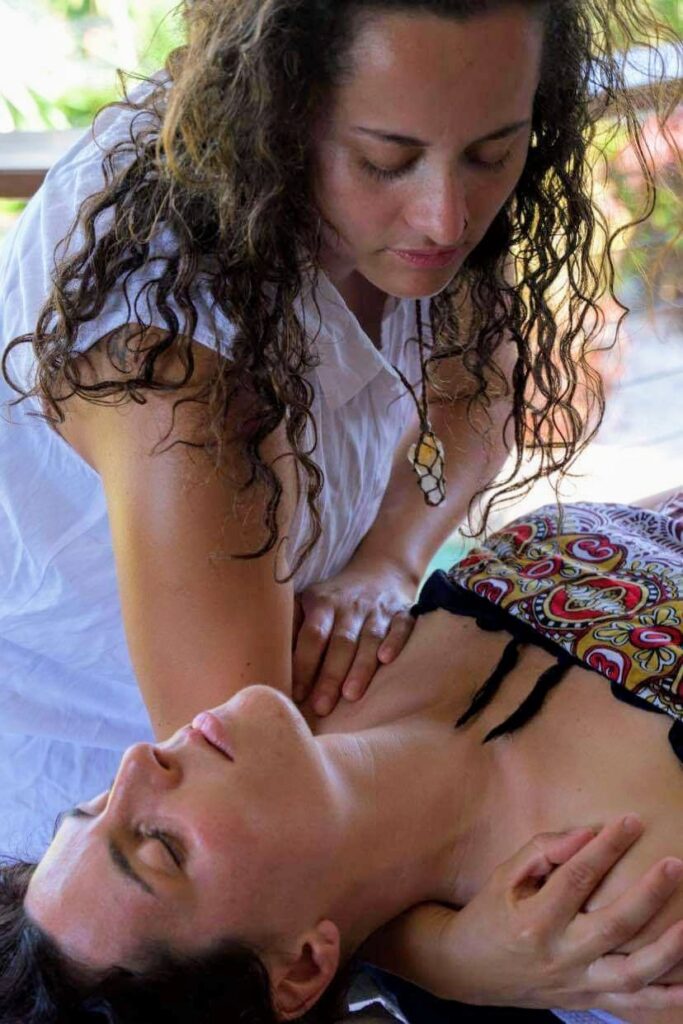
Sports and deep tissue, what they do.
The labels get used loosely on most clinic websites. Here's what actually happens in a session, and what makes it different from a general firm-pressure massage.
Sports massage and deep tissue massage are both subsets of remedial work, applied with a specific intent. Deep tissue uses slow, sustained pressure to reach the deeper muscle layers (where chronic tension actually lives). Sports massage adds techniques for athletic context: warming up tissues before an event, supporting recovery after, addressing the specific patterns of strain that come from your sport or trade. Searches for sports massage near me or deep tissue massage Sunshine Coast wide tend to surface the same kind of work.
I offer sports-focused remedial massage: the same Diploma-qualified, ANTA-registered remedial work, just dialled deeper and tailored for athletes, tradies, and anyone with chronic muscular load.
As a sports massage therapist, my Diploma of Remedial Massage covers the techniques used in both: trigger point release, myofascial work, deep tissue strokes, assisted stretching, and assessment-based treatment planning. The session you book is essentially the same hour. What changes is the emphasis: depth over relaxation, function over feel-good.
The remedial vs deep tissue question.
One of the most common questions I get. The honest answer: there's overlap, but the intent and pressure profile differ. Here's how they line up.
Standard remedial
- Pressure: moderate to firm, varies by area
- Techniques: full remedial toolkit, trigger point, stretching, lighter work where needed
- Best for: pain conditions, injury recovery, postural issues
- How it feels: productive, sometimes intense in specific spots
Sports / deep tissue
- Pressure: firm to deep, with sustained holds on specific points
- Techniques: deep tissue strokes, trigger point holds, stretching, recovery-specific work
- Best for: hard-working bodies, deep chronic tension, athletic recovery
- How it feels: intense but controlled, like a steady melt
For the full breakdown, see remedial vs deep tissue, the full guide.
Who benefits most.
Anyone carrying deep tension, but four groups in particular fill my appointment book.
Athletes & runners
Tight calves, IT bands, plantar fasciitis, hip flexors that won't release. Sunshine Coast has more runners and cyclists than most regions. More on training-day timing.
Tradies & manual workers
Builders, sparkies, plumbers, landscapers. Bodies that work hard for a living and accumulate strain. Tradie-specific recovery work.
Gym-goers & CrossFit
Weightlifters, CrossFitters, F45 regulars. The intensity demands real recovery between sessions, not just rest days.
Desk workers, deep tension
Office or remote workers with chronic upper-back, neck, and forearm tension. Deep work breaks patterns regular massage doesn't reach. More on back pain.
Pre-event vs post-event.
If you've got a race, comp, or big project on, when you book makes a real difference. Two clear windows, with one rule between them.
Pre-event session
- Warm and mobilise the tissues you'll rely on most
- Increase range of motion in restricted joints
- Calm the nervous system ahead of the day
- Address any niggle before it becomes a problem
- Avoid heavy deep work within 48 hours of the event
Post-event session
- Support tissue recovery and metabolic flushing
- Release the spots that locked up under load
- Reduce DOMS (delayed-onset muscle soreness)
- Catch any minor injury before it compounds
- Reset for the next training block
Will it hurt?
The fair question, and worth answering properly. Sports and deep tissue work can be intense, but intensity is not the same as damaging pain. Here's the scale I work with.
"Hurts so good" is the target zone.
The work should reach a place where you can feel something genuinely happening (release, melt, the spot finally giving up) without crossing into sharp, defensive, can't-breathe pain.
I check pressure throughout the session, and you can ask me to back off at any time. You're always in control. The goal is depth, not endurance. If a spot is too sour to work directly, we approach it from a different angle.
Pricing for sports / deep tissue sessions.
Same rates as standard remedial because the underlying training and technique base is the same. Health fund rebate applies through extras cover.
Focused work on one stubborn area. Good for maintenance between training blocks.
A balanced session for a couple of related issues, common pre or post event booking.
The sweet spot for sports work, full assessment plus deep work without rushing.
Deep recovery session for accumulated load or multi-area treatment.
Mobile sessions add $20 to $35 per length, useful for post-event when you don't want to drive. Book online.
Sports massage FAQ.
How is deep tissue different from regular firm pressure?
Firm pressure is a setting on the dial. Deep tissue is a technique. Firm pressure can be applied superficially across the whole body and still only reach the top layers of muscle. Deep tissue uses slow, sustained pressure with specific angles to reach the deeper muscle layers underneath, often holding on a single spot for 30 seconds or more until the tissue releases. It feels different too: firm pressure feels like a strong rub, deep tissue feels like a steady melt.
Should I book sports massage before or after my event?
Both work, with different purposes. Pre-event (ideally 2 to 7 days before): warm up the tissues, improve range of motion, calm the nervous system before competition. Don't book a heavy deep tissue session within 48 hours of the event because soreness afterwards can affect performance. Post-event (24 to 72 hours after): support recovery, flush metabolic waste, address any tightness that's come out of the effort. Most regular athletes also book a maintenance session every 2 to 4 weeks between events.
Will I be sore after the session?
Some mild soreness for 24 to 48 hours is normal after a deep session, similar to the day-after feeling from a good workout. Hydrate well, do gentle movement (walk, swim, stretch), and the soreness typically resolves quickly. Sharp pain, prolonged soreness past 72 hours, or bruising would be unusual and worth flagging if it happens. Most people leave the session feeling looser and lighter rather than wrecked.
Book a sports / deep tissue session.
Hard-working tissue needs proper recovery work. Live availability online, qualified depth from an ANTA-registered therapist, claimable through your private health fund.