What is Kahuna massage?
What is Kahuna massage?
Kahuna massage is a Hawaiian bodywork tradition using long, flowing forearm strokes that move continuously across the whole body. The practitioner works with breath and rhythm rather than one muscle at a time, aiming to restore the body's natural flow.
The 40-word definition above covers the technique itself, but Kahuna massage is also a tradition with history, a teaching lineage, and a particular philosophy about what bodywork is for. This piece covers the practical questions: where it comes from, what makes it different from a standard remedial session, what it feels like, and when it might be the right choice. I'm Lorena, a Sunshine Coast practitioner with Mette's Institute Kahuna Levels 1 to 3 alongside my remedial qualification; the perspective here is grounded in that training and the patients I've worked with over the years.
A closer look at the tradition.
Hawaiian origins
The word kahuna in Hawaiian means "expert" or "keeper of the knowledge". Traditionally, kahuna were specialists in various practices, including healing (kahuna lapa'au), navigation, ceremony, and many others. Massage in pre-contact Hawaii was a normal part of daily life across families, and the more refined forms practised by healing kahuna formed the foundation of what now travels internationally under names including Lomi Lomi, Hawaiian massage, and Kahuna bodywork.
What's important to acknowledge: the form taught and practised today in Australia and Europe is a Western lineage that draws on Hawaiian tradition but is not the same as what an indigenous Hawaiian practitioner in Hawaii would offer. Different teachers, different curricula, different cultural contexts. Treating the tradition with respect means naming this honestly rather than claiming a direct line.
The Western teaching lineage
Kahuna massage as taught in Australia largely traces to Mette's Institute, founded by Mette Sorensen, who studied with Hawaiian teachers and developed a curriculum that's now taught across Levels 1, 2, and 3. My training is in this specific lineage. Other Australian and European teachers offer related Hawaiian-derived training under various names; the kahuna bodywork explained on this site refers specifically to the Mette's Institute curriculum unless otherwise noted.
The signature technique
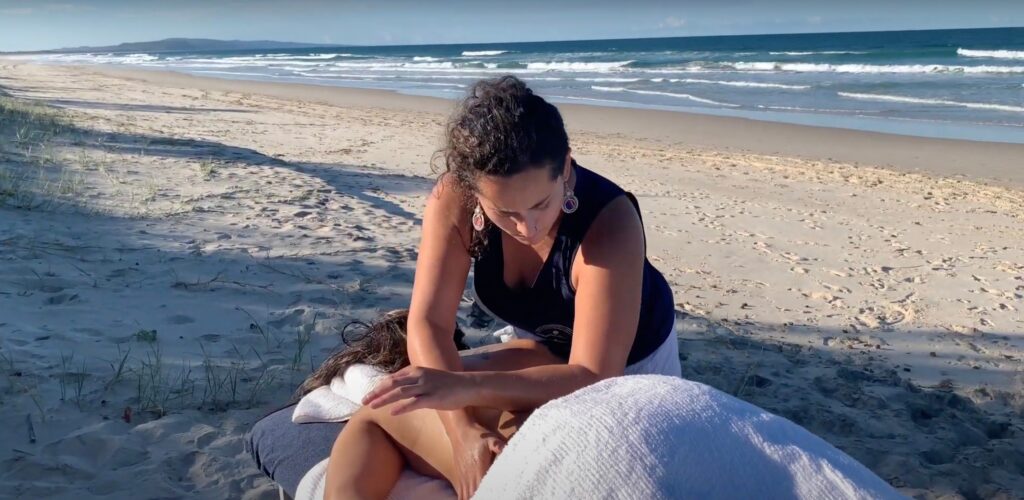
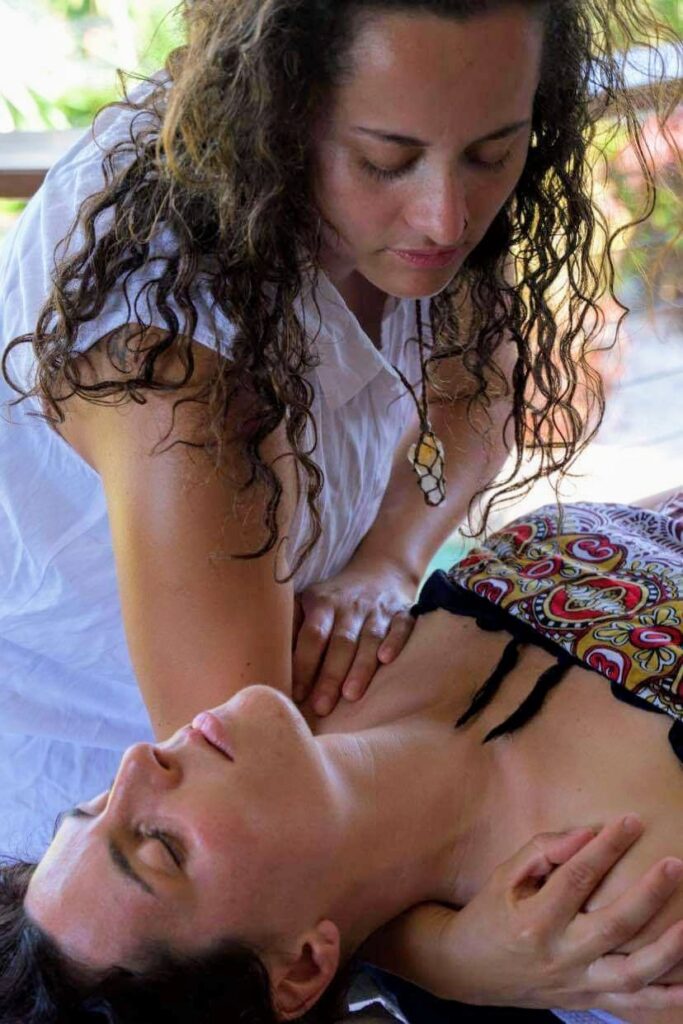
What you actually notice on the table: the forearms do most of the work, not the hands. Long sweeping strokes move from one end of the body to another in single continuous motions, often crossing the midline. The practitioner moves around the table rather than staying in one place. Breathing is part of the technique; many practitioners coordinate their own breath with the strokes, and the rhythm of the session has a flowing quality more like a wave or a current than a series of separate techniques.
"The forearms do most of the work, not the hands. The body is treated as one piece, not a set of separate muscle groups."
Why this matters for you.
The Kahuna massage meaning starts to shift into something practical once you've experienced a session. What the flowing approach actually delivers is different from what targeted remedial work delivers, and understanding the difference helps you choose what suits a given moment.
Targeted remedial work treats specific structures. A locked lower back, a frozen shoulder, sciatica down one leg, a stiff neck after a long week, all of these respond to focused work on the involved muscles, fascia, and joints. The session has a problem and aims at it.
Kahuna bodywork treats the body as a whole. Rather than asking "which muscle is the problem?", it works with the nervous system, the breath, and the body's overall pattern of holding. People come out of Kahuna sessions describing a quality of restoration that's different from remedial: not "my shoulder feels looser" so much as "I feel like myself again". For long-term stress patterns, nervous-system depletion, post-illness recovery, or just a body that's been carrying too much for too long, this whole-body approach often suits.
Neither modality is universally better; they're different tools. Many of my patients alternate between remedial massage for targeted complaints and Kahuna sessions when the wider reset is what's needed.
What to expect on the table.
If you've only had Swedish or remedial massage before, the first Kahuna session feels distinct. A few practical things worth knowing:
What does Kahuna massage feel like
- Less segmented, more flowing. Long strokes that travel across the body rather than stopping at one muscle
- Forearm pressure, not just hands. Broader contact surface, generally softer pressure than deep remedial
- Session length usually 90 minutes minimum. The work needs time to develop its rhythm; shorter sessions don't suit the modality as well
- Lighter draping is common. The strokes need to travel; standard professional draping still applies but the technique requires more access
- Quiet music and dim lighting are typical. The session aims at a restorative state more than a clinical one
- Post-session feels different. Many clients describe a settled, slightly dreamy tiredness rather than the active soreness sometimes felt after deep remedial work
Hydration after a session matters: the flowing strokes mobilise fluid through the body, and a glass or two of water afterwards helps the body process whatever has shifted. A quiet evening rather than a busy night out is usually a good idea for the first session, until you know how your body responds.
When to book a session.
The right moments for a Kahuna session, in my experience:
- End of a long stretch. After a major work project, a busy school term, an intense parenting phase, anything where the body has been on for too long. The session marks the closing of that chapter.
- Recovery from illness or major life events. Post-surgery (once cleared medically), post-illness, post-grief. The whole-body settling fits these recoveries better than targeted work.
- Sleep depletion. The nervous-system settling that Kahuna delivers often shifts sleep meaningfully for a few nights after.
- Periodic restoration. Some patients book monthly or quarterly as a standing reset rather than waiting for a specific need.
- FIFO, shift work, carer roles. Anywhere the body holds vigilance for sustained periods, the Kahuna approach tends to land well.
For a deeper look at how I work and what background I bring to it, the about page covers the practice background.
Common questions.
What does Kahuna massage feel like?
The signature feeling is continuous, flowing forearm strokes that move along the whole body rather than working segment by segment. Generally softer and less targeted than remedial work; pressure stays moderate, rhythm steady. Many clients describe it as a body-wide wave rather than a series of techniques. Post-session feeling is usually a quiet settled tiredness rather than active soreness.
Is Kahuna massage the same as Lomi Lomi?
They share Hawaiian origins and some technique principles, but they are taught as separate lineages with distinct emphases. Lomi Lomi is the broader term used in Hawaii and internationally; Kahuna massage as taught in Australia and Europe (notably through Mette's Institute) is a specific curriculum. A practitioner trained in one isn't automatically trained in the other.
Who is Kahuna massage suited to?
Full-body restoration rather than targeted pain treatment. Stress, nervous-system depletion, long periods of holding tension, post-illness recovery, and people who want to feel held and reset all respond well. For specific muscular complaints (sciatica, frozen shoulder, locked back), remedial is usually the better first option; many clients alternate between the two.
Book a Kahuna session with Lorena.
Sunshine Coast clinic at Valdora or mobile to your home. 90-minute Kahuna restoration is the standard session length. ANTA-registered with Mette's Institute Kahuna L1-3 training.