Lomi Lomi massage in Australia: where to find it.
Lomi Lomi massage in Australia: where to find it.
Lomi Lomi massage is a traditional Hawaiian whole-body modality practised by various lineages in Australia. Authentic versions trace back to Native Hawaiian teachers like Aunty Margaret Machado. Kahuna bodywork is a closely related modality from a parallel Hawaiian lineage taught here.
If you've landed here searching for Lomi Lomi massage Australia, the most useful thing I can do is be straightforward about what it is, where to find genuine versions, and how my own practice relates to it. I'm Lorena, a Sunshine Coast therapist trained in Kahuna bodywork (a related lineage from the Kawai'i tradition through Mette's Institute, not Lomi Lomi specifically). The two modalities overlap significantly but aren't identical, and someone looking for true Lomi Lomi deserves an honest answer rather than a redirect. This piece covers what Lomi Lomi actually is, the Australian practitioner landscape, how to identify authentic offerings, and where my own work sits in the picture.
What Lomi Lomi actually is.
Lomi Lomi is the Hawaiian term meaning to rub, knead, or massage, and it functions as the umbrella name for traditional Hawaiian massage practice. In pre-contact Hawaii, lomi was embedded in everyday family life, practised across the islands within communities. More refined healing work was carried by kahuna lapa'au, healing experts within the broader kahuna framework. After 19th-century colonial suppression, the practice survived through family-line transmission until the cultural revival of the mid-20th century made wider teaching possible.
The teaching lineages
The most significant modern teacher of traditional Lomi Lomi to non-Hawaiian students was Aunty Margaret Machado (1916 to 2009), a Native Hawaiian elder who opened her practice and teaching to outside students from the 1970s onward. Her lineage continues internationally through students who studied with her and now teach others. Other Hawaiian elders have taught smaller groups; the lineages branch and continue in various forms.
A parallel lineage emerged through Kahu Abraham Kawai'i (1936 to 2004), who taught what he called Hawaiian Temple Bodywork. This tradition uses the term Kahuna or Kahuna bodywork rather than Lomi Lomi, and is now taught internationally through schools like Mette's Institute, which is where my own training comes from. Kahuna and Lomi Lomi are family rather than identical: they share roots in Hawaiian healing tradition but represent different teaching lineages with stylistic differences.
The Australian landscape
In Australia, Lomi Lomi practitioners exist in most capital cities and many regional areas, though density varies significantly. Native Hawaiian practitioners living in Australia are rare; most Lomi Lomi here is taught through Western lineages by teachers who studied with Hawaiian elders. Some practitioners trace their training to direct study in Hawaii; others have learned through Australian teachers who themselves studied with Hawaiian masters. Quality and authenticity vary enormously across the market, often without any clear indicator on the practitioner's website.
"Native Hawaiian practitioners living in Australia are rare. Most Lomi Lomi here is taught through Western lineages by teachers who studied with Hawaiian elders."
How to find authentic Lomi Lomi.
If finding authentic Lomi Lomi Australia matters to you (and for many patients it genuinely does), a few signals help distinguish committed practitioners from those using the term loosely.
Lineage transparency
Authentic practitioners almost always name their teacher and lineage. "Trained with [named teacher] in [named school or location]" is what you're looking for. Practitioners who mention a specific Hawaiian elder (Aunty Margaret Machado, Kahu Abraham Kawai'i, or one of the other recognised teachers) are signalling something meaningful. Vague descriptions ("traditional Hawaiian techniques", "ancient Hawaiian healing") without specific teacher names are weaker signals.
Cultural acknowledgment
Practitioners who handle the cultural dimension respectfully tend to be more carefully trained. Look for content acknowledging that Western-taught Lomi Lomi is a modern adaptation rather than identical to indigenous Hawaiian practice; look for naming of colonial suppression history; look for clarity about whether the practitioner is Native Hawaiian or trained in the Western lineage. Practitioners who overclaim continuous unbroken tradition through generic descriptions often haven't engaged with the history.
Training depth
Lomi Lomi training varies from weekend introductory courses through multi-year residencies. Practitioners with substantial formal training (often Level 1 through 3 or equivalent multi-year commitments) tend to deliver more reliable work than those with brief exposure. Asking about training depth before booking is reasonable; genuinely trained practitioners welcome the question.
Practical signals
Beyond credentials, the session itself shows whether it's genuine. Authentic Lomi Lomi runs as continuous flowing whole-body work with breath-coordinated rhythm; sessions that feel like segmented Swedish massage with Hawaiian-sounding music aren't the same modality. A 60-minute Lomi Lomi session feels different from a 60-minute Swedish session; if it doesn't, that's a signal.
Lomi Lomi and Kahuna.
Since this site is run by a Kahuna practitioner, a brief honest comparison of the two related modalities helps frame what's on offer here versus what you're looking for if you specifically want Lomi Lomi.
For most patients, the practical question splits into two cases. In the first case, if specifically Lomi Lomi matters to you for cultural or lineage reasons, finding a dedicated Lomi Lomi practitioner with the right lineage is worth the search. In the second case, if the broader family of flowing Hawaiian-style bodywork is what you're after, Kahuna delivers very similar work and may be the more practical option depending on your location.
Finding a practitioner.
If you want Lomi Lomi specifically
- Search for practitioners who name their teacher and lineage: Aunty Margaret Machado tradition, direct Hawaii training, or similar specifics
- Check for cultural acknowledgment: practitioners who handle the colonial history and adaptation respectfully tend to be more carefully trained
- Ask about training depth before booking; multi-year commitments suggest more reliable work than weekend courses
- Try a session and trust your judgement: the work itself reveals whether the practitioner is genuinely trained
- Consider travel if local options are weak; some patients travel interstate occasionally for sessions with practitioners they trust
- Native Hawaiian practitioners in Australia are rare but exist; that's a separate and worthwhile search
If Kahuna would serve you well
- Kahuna is closely related to Lomi Lomi; the work feels similar in most respects to a patient receiving it
- Mette's Institute is the main Australian Kahuna training; practitioners trained through this curriculum have a consistent training depth
- Availability across capital cities and regions is reasonable; the Sunshine Coast specifically has a small but established Kahuna community
- Sessions are full-body, flowing, breath-rhythm, typically 60 to 120 minutes
- Health fund rebates don't apply to Kahuna (or to Lomi Lomi); both are outside the standard remedial scope. Pricing reflects this.
For my own practice, see Kahuna massage for service detail and about for training background. The related remedial massage service is what supports rebatable booking; bookings at book online.
Common questions.
Where can I find authentic Lomi Lomi in Australia?
Authentic Lomi Lomi australia practitioners exist in most capital cities and many regional areas, though density varies. The most reliable path is searching specifically for practitioners who name their teacher lineage on their website, particularly those tracing back to Aunty Margaret Machado or to practitioners trained in Hawaii directly. Native Hawaiian practitioners currently in Australia are rare; most Lomi Lomi here is taught through Western lineages. The Lomi Lomi massage near me search is best filtered by lineage transparency: practitioners who clearly state their training are usually more trustworthy.
What's the difference between Lomi Lomi and Kahuna massage?
Both come from Hawaiian healing traditions but represent different lineages. Lomi Lomi (literally "to rub or knead") is the umbrella term for traditional Hawaiian massage and is mostly associated with the lineage continuing through Aunty Margaret Machado. Kahuna bodywork descends from Kahu Abraham Kawai'i, taught internationally through schools like Mette's Institute. The techniques share family resemblance (flowing forearm strokes, full-body approach, breath rhythm) but the cultural framing and stylistic emphases differ.
Is Hawaiian massage in Australia the same as Lomi Lomi?
Sometimes yes, often loosely. The term hawaiian massage in australia is used inconsistently: some practitioners mean specifically Lomi Lomi from a defined lineage; others use it for any massage with flowing strokes that vaguely echoes Hawaiian style; some use it for Kahuna (a related but distinct modality). Quality varies enormously. The most reliable signal is whether the practitioner clearly names their training lineage, not which broad term they use. If lineage isn't named on the website, asking before booking is reasonable.
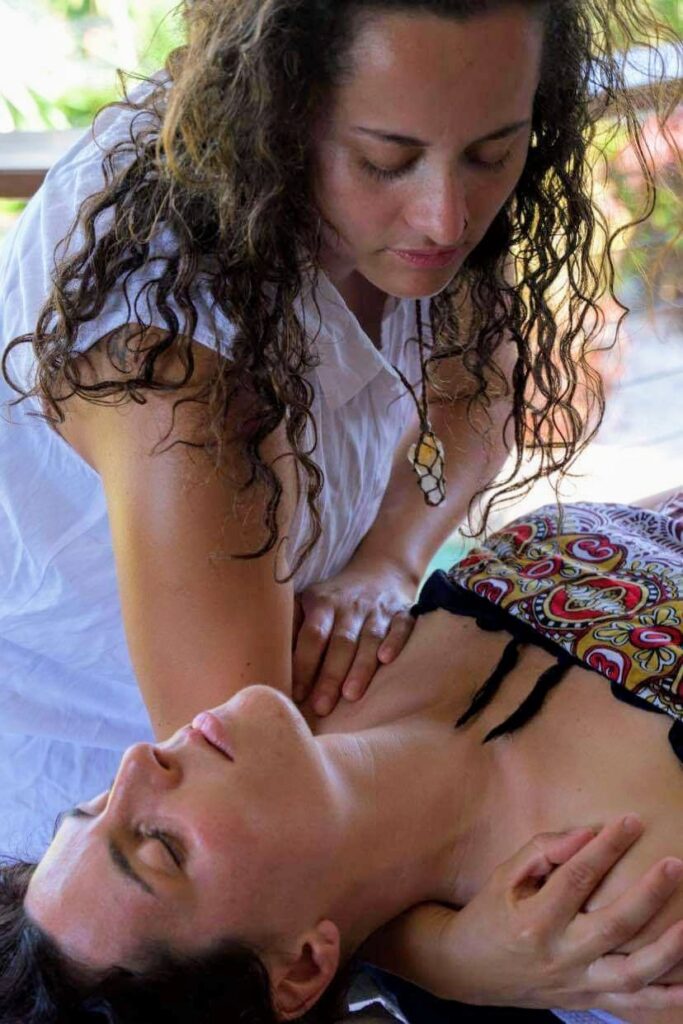
Try Kahuna bodywork instead.
If the broader family of flowing Hawaiian-style bodywork would serve you, Kahuna from the Kawai'i lineage (Mette's Institute Levels 1 to 3) delivers very similar work. Sunshine Coast clinic at Valdora or mobile to your home.