Massage and mental health.

Massage and mental health.
Massage supports mental health through nervous-system regulation and parasympathetic activation, with measurable effects on cortisol, mood, and physical anxiety symptoms. It works as complementary support alongside therapy and medical care, not as a substitute for clinical mental health treatment.
Massage for mental health is a topic where being honest about both what bodywork can do and what it can't do matters more than usual. There's genuine value in regular massage as part of a broader mental health picture, and there's also a real risk of overclaiming, of suggesting that a session can do work that actually requires a psychologist, GP, or psychiatrist. This piece walks through the actual mechanisms, the situations where massage adds useful support, the situations where it doesn't, and how to think about fitting bodywork into broader care. I'm Lorena, a Sunshine Coast remedial and Kahuna therapist; nothing here is clinical mental health advice, and I'm not the right person for that. What follows is what I see from the bodywork side.
How massage affects mental health.
Three mechanisms are involved when massage produces a noticeable effect on how someone feels, and the massage anxiety depression literature focuses on these.
Nervous-system regulation
The single most relevant mechanism for mental health is the massage nervous system shift. Most people in modern life run in low-grade sympathetic activation (fight, flight, freeze) more often than the body is designed for; the autonomic nervous system gets stuck in alert mode. A massage session shifts the body toward parasympathetic activity (rest, digest, recover), and the effect is more pronounced with longer, slower, whole-body work (Kahuna, Swedish) than with focused remedial work. Over regular sessions, this trains the nervous system to find parasympathetic more easily on its own.
Hormonal and chemical changes
Massage produces measurable changes in stress hormones and neurotransmitters. Cortisol (the primary stress hormone) typically drops; serotonin and dopamine often rise. Oxytocin, released through warm touch in safe contexts, also tends to increase. These are not dramatic effects in the sense of replacing medication, but they're real and they accumulate across sessions. The hormonal effects are part of why patients commonly report improved mood and sleep in the days following a session, beyond what a single hour on a table would obviously produce.
Embodied presence and body-mind reconnection
Mental health patterns often involve a degree of disconnection from the body, particularly with anxiety (attention pulled into anticipated futures) and depression (attention pulled into withheld emotional content). Massage brings attention back to physical present-tense experience, which has its own effect distinct from the chemical and nervous-system mechanisms. Sometimes this surfaces as massage emotional release: tears, deep sighs, a feeling of relief. This is normal and a sign the body is doing what it's designed to do.
"Massage adds useful support to mental health care. It doesn't replace any of the central components of clinical care."
Where bodywork actually helps.
Specific patterns where massage genuinely adds value as part of broader care:
Stress and burnout. Regular sessions help the nervous system remember the parasympathetic state, particularly during sustained demanding periods. This is the highest-confidence use of massage for mental wellbeing.
Mild to moderate anxiety. The combination of nervous-system regulation, hormonal effects, and embodied presence often produces meaningful reduction in physical anxiety symptoms (chest tightness, jaw clenching, shallow breathing, sleep disruption). This sits alongside therapy, medication, or other care, not instead of it.
Recovery from acute stressful periods: post-divorce, post-bereavement (with sensitivity), high-pressure work projects ending, study periods finishing. The body has been carrying load; sessions help it discharge.
Connection back to the body for patients whose mental health work has been primarily cognitive. Sometimes adding a physical dimension to broader self-care opens new ground.
What massage does not do
Massage does not treat clinical anxiety or depression as conditions; it doesn't replace psychotherapy, medication, GP care, or psychiatric care; it isn't appropriate as the primary support for severe mental illness, suicidal ideation, active eating disorders, or trauma recovery requiring specialised trauma-informed treatment. For any of these, professional mental health care from a qualified clinician (GP, psychologist, psychiatrist, social worker, mental health nurse) is the central piece. If you're in crisis or in distress, contact your GP, Lifeline (13 11 14 in Australia), or your local mental health service. Massage can be part of a broader care picture, never the whole of it.
Fitting it into broader care.
What works well
- Monthly or fortnightly sessions alongside whatever clinical mental health care you're using; pick a rhythm that's sustainable
- Whole-body, slower modalities (Kahuna or Swedish) over deep remedial when mental health is the primary reason for booking
- Telling the therapist relevant context: current diagnoses, medications affecting sensation, areas to avoid, trauma history if you're comfortable sharing
- Treating bodywork as one piece of the picture alongside therapy, sleep, movement, social connection, medical care
- Pacing the session to your nervous system; if a session feels too intense, lighter pressure or shorter duration is appropriate, not failure
- Bringing what surfaces to your therapist or counsellor if significant emotional content comes up; bodywork opens doors that talk-based work then walks through
What to watch for
- Don't substitute massage for medication or therapy without your treating clinician's agreement; clinical mental health care is the central piece
- If a session consistently distresses you, stop and reconsider; not every patient or every modality suits every situation
- Notice trauma triggers; if specific touch, positioning, or sensations bring up overwhelming responses, that's information to discuss with both the therapist and a mental health professional
- Be honest with yourself about what's working; the goal is genuine support, not the appearance of self-care
- Avoid intense sessions during acute crisis; gentler work or postponement is often better than pushing through
Practical sequence.
If you're considering massage as part of your mental health care:
- Talk to your GP or treating professional first if you're working with one. They can advise on whether massage suits your specific situation and what to watch for.
- Choose a gentler modality to start. Swedish or Kahuna typically suits better than deep remedial for mental health support.
- Plan the first session with low expectations; you're checking fit, not solving anything in one hour.
- Notice the next week: sleep quality, anxiety symptoms, mood, body tension. If the session was useful, you'll see signals in the days after.
- Build a regular rhythm if the first few sessions deliver value; ad-hoc sessions help less than consistent ones.
- Reassess regularly: is this still serving your broader care, or has it become routine without benefit? Either is fine; the point is to keep checking.
For my own service detail: Kahuna massage tends to suit mental-health-focused booking better than remedial; remedial massage handles the physical patterns stress can produce. Practice background at about; bookings at book online.
Common questions.
Can massage help with anxiety and depression?
Massage produces measurable changes in cortisol, parasympathetic activity, and self-reported anxiety symptoms, and many patients find regular sessions a useful supporting layer in their broader care. It works as a complementary support alongside therapy, medication, exercise, sleep, and the other components of mental health care, not as a replacement. If you're managing diagnosed anxiety or depression, your GP and treating mental health professionals should remain central; massage can be part of the picture they help you build, not a substitute.
Why do I sometimes cry or feel emotional during a massage?
Emotional release during or after a session is more common than most patients expect, particularly during deeper bodywork like Kahuna. The body holds tension and emotional patterns physically; when the nervous system shifts toward parasympathetic, what was held can surface. Tears, laughter, deep breaths, sadness, or relief are all normal responses; they don't mean anything is wrong with you. If significant emotional content surfaces consistently, that's useful information to bring to a therapist or counsellor; bodywork can open the door, talk-based work is where deeper processing happens.
Should I tell my therapist about my mental health?
Yes, to the extent you're comfortable. The therapist doesn't need a full clinical history, but knowing relevant context (current diagnoses, medications affecting bodily sensation, areas you'd rather not have touched, trauma history if relevant) helps the session work better and avoid inadvertent harm. A good practitioner treats this confidentially and uses it to shape the session. If you're working with a psychologist or psychiatrist alongside, mentioning it allows coordination rather than working in isolation.
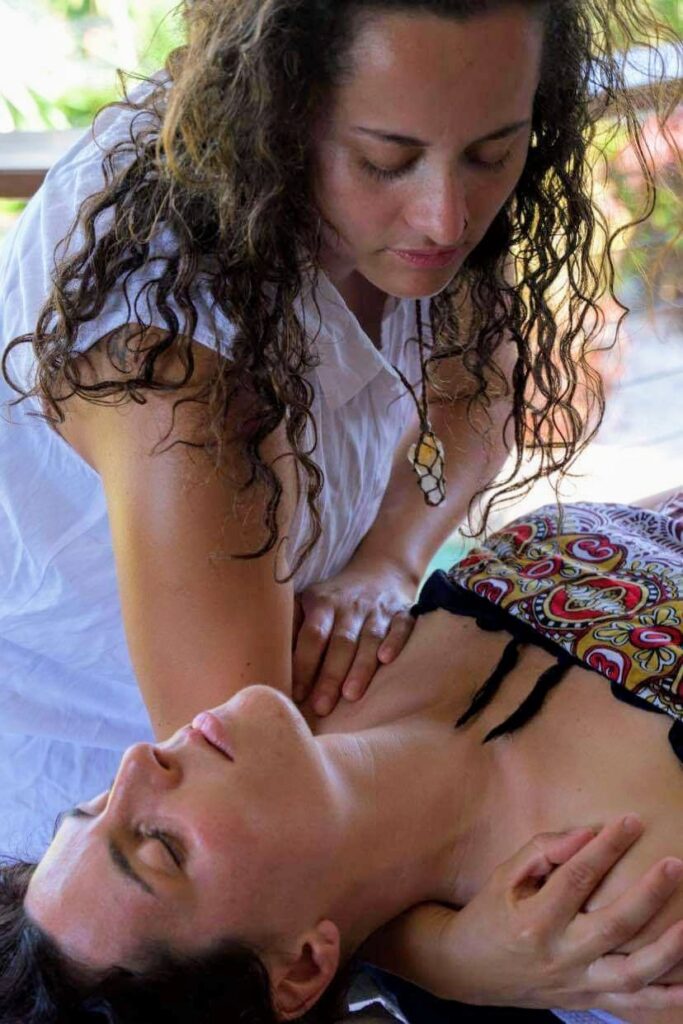
Bodywork as part of broader care.
Regular sessions as a supporting layer in mental health care, not a substitute for it. Sunshine Coast clinic at Valdora or mobile to your home. ANTA-registered.