Massage for sports injuries.
Assessment-led remedial massage for sports injuries and recovery, with honest scope-of-practice on acute vs chronic timing, when to ice, and when to refer to a physiotherapist. ANTA-registered, claimable through most extras cover.
Massage for sports injuries, what works.
Remedial massage for sports injury helps muscle strains and recovery-phase work: tight surrounding tissue, compensatory patterns, scar mobility, return-to-load preparation. Not for acute fractures or ligament tears. Timing matters: not directly on fresh acute injury in the first 24 to 72 hours.
Acute vs chronic sports injuries.
The biggest single factor in how sports injury massage works is whether the injury is acute (recent) or chronic (settled). The same techniques apply at different times.
Acute injury
Hours to days, active inflammation
Chronic pattern
Weeks to months, settled inflammation
When to massage vs ice.
The two work at different stages. Getting the timing right reduces healing time; getting it wrong can extend the injury.
Ice first
Acute phase, active swelling
Ice 15 to 20 minutes, several times daily for the first 24 to 72 hours after an acute injury. Compression and elevation alongside if appropriate. Movement within pain-free range. Direct massage on the injury at this stage usually makes the inflammation worse; light work elsewhere on the body is fine and often useful.
Massage introduces
Subacute phase, inflammation settling
Once the acute inflammation has settled (no active swelling, pain is duller rather than sharp), gentle remedial work around the injury can begin. Direct work on the injured tissue comes later, building progressively as healing progresses. Heat replaces ice for muscle tightness around the injury once acute phase passes.
My approach for athletes.
Active patients carry different load patterns than the general clinic caseload. Runners hold tension through hip flexors, hamstrings, and calves; swimmers through shoulders and upper back; surfers through the lower back, shoulders, and rotators; cyclists through quads, hip flexors, and the neck. Sports injury massage that ignores the specific demands of the sport leaves work undone. The first session for an athlete covers the immediate issue alongside an understanding of the broader load pattern, with subsequent sessions shaped around training cycles and recovery needs.
For active patients in ongoing care, sessions sit at three different stages: pre-event work (light, mobility-focused, days before a key event), post-event recovery (24 to 48 hours after), and maintenance (regular sessions independent of events). The mix shifts with the training calendar. More on the active-recovery angle on the sports massage page, with the athlete-specific perspective on the massage for athletes page.
Recovery timeline.
Four typical stages for a moderate sports injury. Specific timelines shift with the injury and individual; this is the rhythm rather than a fixed schedule.
Settle the flare
Day 0 to 3
Rest, ice, gentle movement, no direct massage. Assessment for severity if function is significantly affected.
Introduce work
Day 3 to Week 2
Massage starts around the injury. Heat replaces ice. Pain-free movement progresses. Compensation patterns get attention early.
Build back
Week 2 to 6
Direct remedial work on the injured tissue. Mobility, scar work where relevant, gradual return to load. Weekly to fortnightly sessions.
Hold the gains
Week 6 onward
Monthly sessions for ongoing load management. Performance-focused work, prevention of compensation patterns recurring.
Who I am, and what I'm not.
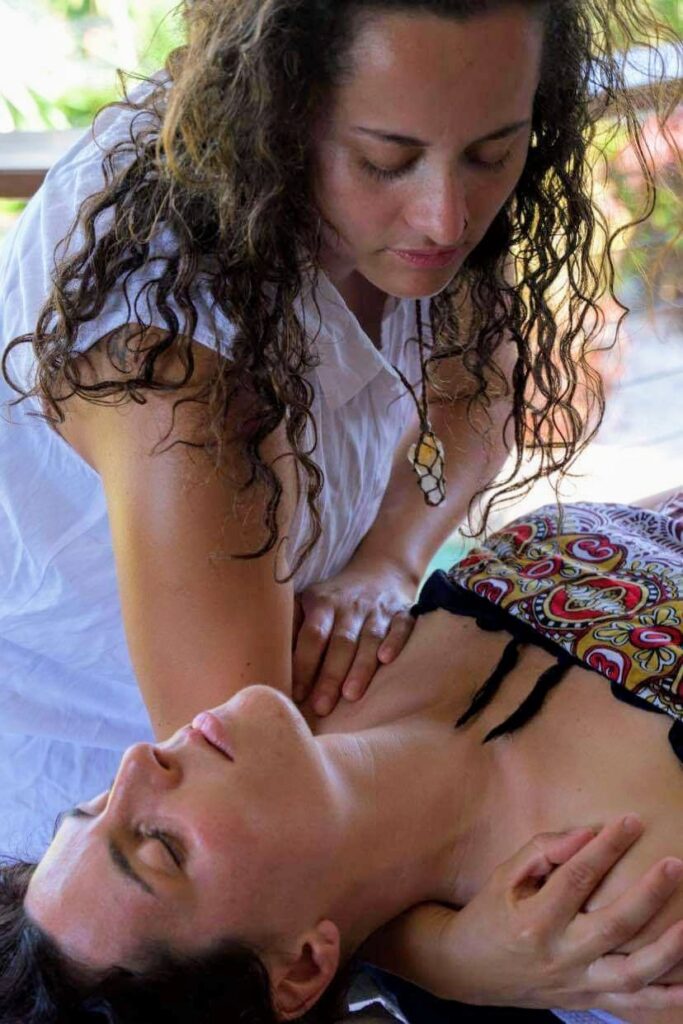
I'm Lorena, a remedial massage therapist on the Sunshine Coast. Diploma of Remedial Massage (HLT52015) and ANTA-registered, with additional training through Mette's Institute Kahuna Levels 1, 2, and 3. My remit is the soft-tissue, recovery, and movement-pattern component of sports injuries. I'm not a physiotherapist, sports medicine doctor, or surgeon. For acute injuries with significant function loss, suspected fractures, or ligament involvement, physiotherapy or medical assessment leads, with massage in support if appropriate.
Looking for the best massage for sports injury locally? The credential is the floor; what matters more is honest assessment about which stage of the injury you're in and whether massage is the right next step. For active patients searching for massage for sports recovery as part of ongoing training support, the work shapes around the load and the calendar rather than running as a generic routine.
Diploma of Remedial Massage (HLT52015) · ANTA registered · Mette's Institute Kahuna L1-3
When to see a doctor or physio first.
Some sports injuries need medical or physiotherapy assessment before any massage work. The signs below mean assessment leads, with massage following only once the picture is clear.
See a GP, sports doctor, or physio first if
- Inability to bear weight or move the affected limb through normal range
- Visible deformity, severe immediate swelling, or significant bruising
- A pop, crack, or snap heard or felt at the moment of injury
- Joint instability (feeling that the joint is giving way)
- Numbness, tingling, or weakness beyond the injured area
- Pain that's severe and unchanged by position or rest after 24 to 48 hours
For grade 2 or 3 strains, suspected ligament tears, or any of the above, get assessment first. Massage can usually be added later as a useful part of the rehabilitation picture.
For chronic patterns or recovery-phase work, sessions sit alongside any physio or sports medicine care you're already receiving. Letting me know what the wider treatment plan looks like helps shape the session. Claimable through most extras cover when delivered as remedial; details on the health fund rebates page.
Session pricing.
Clinic at Valdora or mobile across the Sunshine Coast. Sports injury work usually needs 60 or 75 minutes; longer sessions suit cases needing wider coverage of compensation patterns. Claimable through most extras cover.
Mobile prices include travel surcharge by zone ($10 to $30 depending on suburb). Full pricing page.
Sports injury massage FAQ.
Should I get a massage right after a sports injury?
Not directly on the injury. For the first 24 to 72 hours after an acute injury, the tissue is inflamed and bleeding into the surrounding area; deep massage at this stage can worsen swelling and slow healing. Light lymphatic-style work around the area can be useful. The rule of thumb is to wait until acute inflammation has settled (usually day three onwards) before any direct work.
Can massage prevent sports injuries?
Indirectly, yes. Regular massage addresses muscular imbalances, restricted mobility, and recovery deficits that contribute to injuries over time. It doesn't prevent acute trauma (a rolled ankle, a sudden tear), but it helps the body absorb training load better, often translating to fewer overuse injuries. Monthly maintenance with extra sessions around heavier training periods is the common rhythm.
How soon can I get massage after pulling a muscle?
For a mild pulled muscle (grade 1 strain), gentle remedial work can usually start within three to five days. For more significant strains with swelling, bruising, or weakness, wait longer (often 7 to 14 days) and get medical or physiotherapy assessment first. Early massage for pulled muscle is around the injury rather than directly on it; direct work comes later as healing progresses.
Book your session for sports injuries.
Assessment-led remedial massage on the Sunshine Coast. ANTA-registered, claimable through extras cover. Clinic at Valdora or mobile to your home.