Massage for stress & anxiety.
Kahuna bodywork and remedial massage for stress and the body's response to it, with honest scope-of-practice about where massage helps the nervous system and where mental-health care needs to lead. Trained through Mette's Institute Kahuna L1-3, ANTA-registered.
Massage for stress, what works.
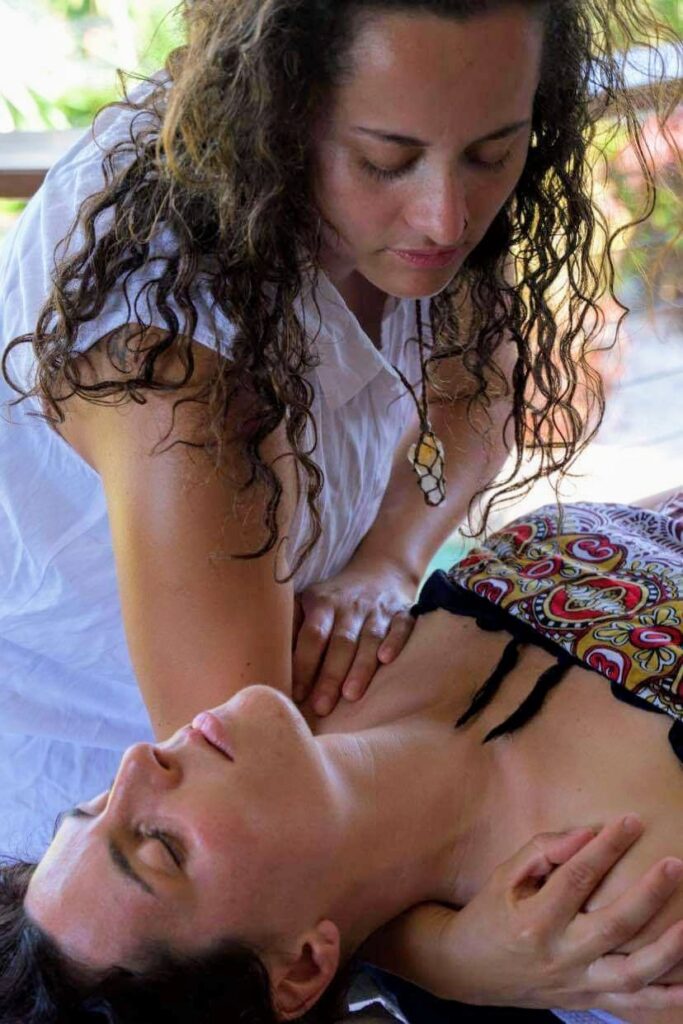
Massage activates the parasympathetic nervous system, lowers heart rate, and reduces short-term cortisol. Kahuna bodywork suits emotional load particularly well through its continuous, rhythmic flow. For clinical anxiety, massage sits alongside mental-health care, not as a substitute.
How chronic stress shows up.
Stress isn't just a feeling. The body wears it in patterns across muscles, breathing, sleep, and the autonomic nervous system. Stress relief massage starts by reading those patterns.
Locked muscles
Shoulders held up, jaw clenched, neck stiff, lower back tight. The protective bracing the body keeps doing whether the threat is there or not.
Shallow breathing
Chest-only breathing, locked diaphragm, tight intercostals. Stress shrinks the breath, and the limited oxygen feeds back into the stress pattern.
Broken sleep
Trouble dropping off, waking at 3am, unrefreshing sleep. Cortisol patterns disrupt the architecture of rest itself.
Wired-and-tired
Sympathetic nervous system stuck in "on", parasympathetic underactive. The combination of restless energy and exhaustion at once.
Massage and the nervous system.
The short-term physiology is well documented. Within a session, massage activates the parasympathetic branch of the autonomic nervous system: heart rate drops, breathing slows and deepens, blood pressure tends to come down, and muscle tone in chronically held areas reduces. Short-term cortisol decreases modestly. The shift from sympathetic dominance toward parasympathetic state is what the body experiences as "settling".
The honest version of the longer-term claim is more measured. Regular sessions appear to help maintain that calmer baseline for people whose stress is largely situational and physiological. For massage and mental health conditions specifically, the evidence is mixed: massage isn't a treatment for clinical anxiety or depression, but the nervous-system effects can be a useful supportive layer alongside therapy. The framing matters: massage works on the body's response to stress, not on the underlying causes of clinical mental health conditions.
Why Kahuna suits emotional release.
For stress and emotional load specifically, Kahuna bodywork offers something that targeted remedial work doesn't. Three reasons the modality suits this use case.
The flow itself
Long, continuous forearm and hand strokes moving across the whole body without stopping. The rhythm has a regulating quality similar to being rocked or to slow swimming, and the nervous system responds to that pattern reliably.
Whole-body, not spot-fix
Kahuna doesn't ask the patient to identify a specific problem area. The work covers everything from feet to head as a single piece. For stress patterns that show up everywhere at once, that wholeness is the point.
Space for release
Some clients experience emotional release during Kahuna sessions: tears, deep sighs, periods of unexpected quiet. The space is held without comment or interpretation. Nothing has to be processed verbally for the body to let something settle.
The Kahuna lineage I trained through (Mette's Institute Levels 1, 2, and 3) treats the work as a full body-and-nervous-system practice rather than relaxation massage. Sessions typically run 90 or 120 minutes; the length matters because the regulating effect builds across the session. For more on the modality itself, see the Kahuna massage page.
Combining with other self-care.
Massage works better as part of a wider stress-management approach than as a standalone fix. Four areas where ongoing self-care compounds the work.
Sleep as the foundation
Consistent bedtime, screens off an hour before, cool dark room. Sleep is where the nervous system does its repair work; nothing else compensates for sustained sleep deprivation.
Movement, daily
Walking counts. Daily movement at moderate intensity is one of the most reliable parasympathetic regulators available, and it costs nothing.
Breath work
Slow nasal breathing, longer exhale than inhale. Two to three minutes, two to three times daily. The fastest available lever for shifting toward parasympathetic state.
Mental-health support
Therapy, GP, psychiatrist where appropriate. For clinical anxiety or depression, professional mental-health care does the work massage can't.
My approach, and what I'm not.
I'm Lorena, a remedial massage therapist and Kahuna practitioner on the Sunshine Coast. Diploma of Remedial Massage (HLT52015), ANTA-registered, and trained through Mette's Institute Kahuna Levels 1, 2, and 3. A first session for stress starts with brief intake about your current load, what's showing up in the body, what other care is in place, and which approach suits the day: the targeted work of remedial or the whole-body flow of Kahuna. Sessions can move between the two.
My remit is the body's response to stress. I'm not a psychologist, counsellor, or psychiatrist, and clinical anxiety, depression, trauma, or any condition needing mental-health diagnosis is outside my scope. Massage for anxiety in the clinical sense works as supportive care, not standalone. If the picture is bigger than physiological stress, the most useful thing I can do is name that honestly and recommend a GP or mental-health professional.
Diploma of Remedial Massage (HLT52015) · ANTA registered · Mette's Institute Kahuna L1-3
When to seek mental-health support.
Some patterns mean massage is the wrong starting point. The signs below mean a GP or mental-health professional needs to lead, with massage in support if relevant at all.
See a GP or mental-health professional if any of these apply
- Thoughts of self-harm or suicide, current or recent
- Panic attacks occurring regularly or interfering with daily life
- Persistent low mood, hopelessness, or loss of interest in things that previously mattered
- Trauma history (PTSD, abuse, significant loss) without trauma-informed therapy in place
- Severe anxiety that's restricting work, relationships, or basic daily function
- Substance use as the primary stress-management strategy
In Australia, call Lifeline on 13 11 14 for immediate support. For ongoing care, your GP is the first stop for referrals to psychologists, psychiatrists, and other mental-health services.
For everyday stress and the body's response to it, massage is genuinely useful and the work compounds over time. Sessions are claimable through most extras cover; details on the health fund rebates page. For active-recovery and sleep-related sports patterns, the sports massage page covers more.
Session pricing.
Clinic at Valdora or mobile across the Sunshine Coast. Kahuna sessions usually run 90 or 120 minutes; remedial-focused sessions sit at 60 or 75. Claimable through most extras cover when delivered as remedial.
Mobile prices include travel surcharge by zone ($10 to $30 depending on suburb). Full pricing page.
Stress and anxiety massage FAQ.
Can massage help with anxiety?
For everyday stress and sub-clinical anxiety, the nervous-system effects (parasympathetic activation, lower heart rate, reduced cortisol) often translate into meaningful relief. For clinical anxiety disorders, evidence is more mixed; massage sits as supportive care alongside appropriate mental-health treatment, not as a substitute. The honest version: massage helps the nervous-system component of stress and anxiety, but doesn't treat anxiety as a clinical condition.
What's the difference between regular massage and Kahuna for stress?
Remedial is targeted: it works on specific tension patterns stress produces (locked shoulders, jaw clenching, tight breathing muscles). Kahuna is flowing and continuous; rhythmic strokes move across the whole body without stopping. The rhythm itself regulates the nervous system, and sessions tend to produce a deeper full-body settling. For stress and emotional load, Kahuna often suits better; for stress as specific tension patterns, remedial may.
How often should I get massage for stress relief?
For ongoing maintenance, monthly sessions are the common rhythm. During higher-stress periods (workload spikes, family pressure, grief, transition), fortnightly can be the right cadence for a stretch. The work compounds; nervous-system patterns shift more reliably with consistent sessions over months than with one-off bookings under pressure.
Book your session for stress & anxiety.
Kahuna bodywork and remedial massage on the Sunshine Coast. ANTA-registered, claimable as remedial through extras cover. Clinic at Valdora or mobile to your home.