Pregnancy massage on the Sunshine Coast.
Searches for safe pregnancy massage sunshine coast wide end here. Side-lying technique with supportive bolsters, modifications tailored to your trimester, and the chance to be looked after for an hour while someone else carries the weight of your day. Prenatal massage delivered by an ANTA-registered therapist, health fund rebate ready.
Pregnancy massage on the Sunshine Coast.
Carrying a baby is hard physical work. The aches, the swelling, the broken sleep, the postural strain from a body that keeps shifting. The best pregnancy massage you'll find on the Sunshine Coast meets all of that with skilled hands and the right positioning.
I treat pregnant clients across every stage, from very early to days before due date. The work is essentially remedial massage adapted for pregnancy: same therapeutic intent (pain relief, postural support, functional improvement), with positioning and pressure tailored to your trimester. The terms pregnancy massage and prenatal massage describe the same work, you'll see both used interchangeably.
Many arrive because something specific has flared. A sciatic nerve that's been niggling for weeks. A lower back that catches every time they roll over in bed. Ankles that have ballooned by 4pm. Third trimester massage focuses on those late-pregnancy aches. People often leave with the issue addressed and a quiet hour of nervous-system rest as a bonus.
Is pregnancy massage safe?
The honest, evidence-based answer follows. There are sensible precautions to take, but for the vast majority of pregnancies, qualified massage is one of the safest non-invasive ways to manage pregnancy discomfort.
Yes. Safe pregnancy massage delivered by a qualified therapist is appropriate across all three trimesters, using side-lying positioning and pressure modifications. Most Australian remedial massage training (including my Diploma) covers prenatal technique as core curriculum.
The reason qualified matters: there are specific positions, pressure points, and abdominal techniques that should be avoided or modified during pregnancy. A trained therapist knows what those are. After about 20 weeks, lying flat on your back for long periods can compress the inferior vena cava and reduce blood flow, so we work side-lying with bolsters. Certain pressure points (mostly on the ankles and webbing of the hand) are associated with uterine activity and are avoided. Deep abdominal work is off-limits across pregnancy.
If your pregnancy involves complications (pre-eclampsia, placenta previa, gestational diabetes, history of preterm labour), please check with your GP or midwife before booking. For most pregnancies though, massage is encouraged by obstetric teams. If you've been searching for pregnancy massage near me on the Sunshine Coast and want a deeper read, pregnancy massage safety, the full guide.
Benefits of pregnancy massage.
The aches change as the pregnancy progresses. Here's what regular sessions typically help with.
Lower back and hip pain
As your weight shifts forward and your pelvis loosens, the lower back compensates. Targeted work releases that compensation pattern.
Swelling in legs and ankles
Gentle drainage techniques help move fluid that's been pooling, especially toward the end of the day or in warmer months.
Better sleep
When physical tension drops, sleep gets easier. Clients regularly tell me they slept through for the first time in weeks after a session.
Sciatic relief
A common second and third trimester complaint. Releasing the glutes, piriformis, and lower back often calms the nerve pain dramatically.
Mood and anxiety
Pregnancy hormones are intense. Sessions activate the parasympathetic system, which is the rest-and-digest mode the body uses to reset.
Postural support
Your body's centre of gravity shifts month by month. Releasing the muscles that overwork helps you adapt with less pain.
What to expect in a pregnancy session.
The mechanics matter. Here's exactly how positioning works so you can picture the session before you arrive.
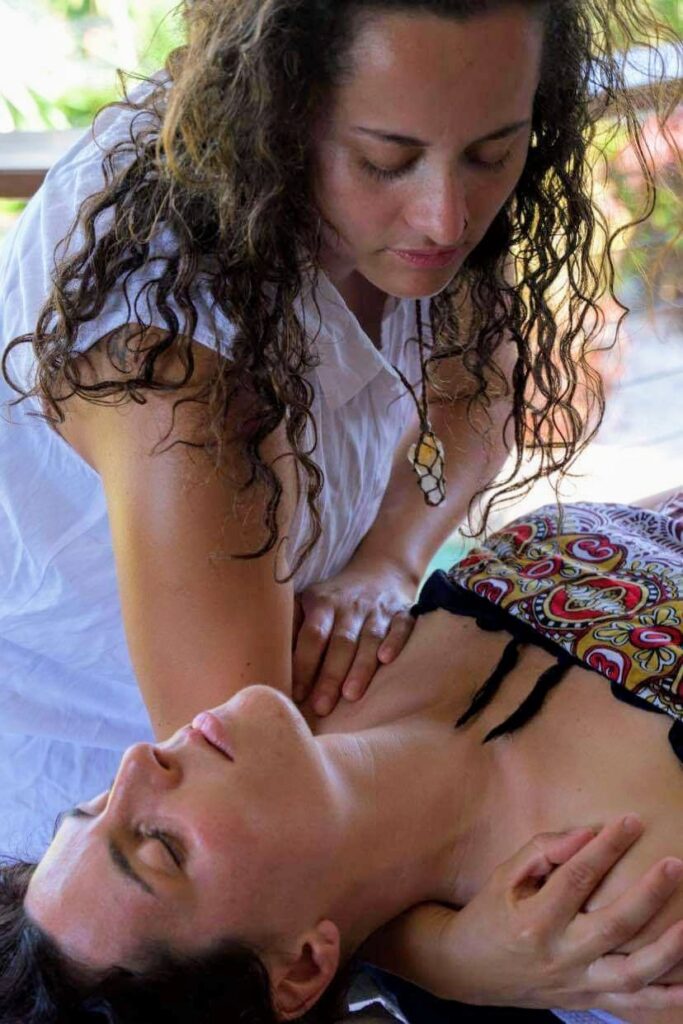
Side-lying with full pillow support.
- You'll lie on your side with bolsters supporting your belly, between your knees, and under your top arm.
- We switch sides about halfway through so I can work both sides of your back, hips, and legs evenly.
- Brief semi-reclined position with cushions behind your back for face, neck, and shoulder work.
- You're fully draped throughout. Only the area being worked is exposed at any moment.
- You can ask me to reposition or stop at any time. Discomfort means we adjust, not push through.
- Bathroom breaks mid-session are completely normal and welcome. No need to apologise.
Side-lying with bolster support
Each trimester, what's different.
Your body is doing different work in each trimester. Sessions adapt accordingly.
First trimester
- Gentle pressure across the board, building trust with your body's response
- Focus on neck, shoulders, and feet (the areas hit hardest by early fatigue)
- No deep abdominal work, no specific reflex points
- Side-lying becomes the default position
Second trimester
- The most comfortable phase for most clients, energy returns, nausea eases
- Broader treatment options including deeper remedial work where appropriate
- Lower back and hips become the main focus as the bump starts shifting your posture
- Side-lying with one bolster between knees is usually enough
Third trimester
- Full side-lying setup with multiple bolsters for comfort
- Focus shifts to pelvis, hips, lower back, and calves (where most of the load lands)
- Gentle drainage work for swelling in legs and ankles
- Sessions often shorten to 60 minutes for comfort with frequent position changes
When pregnancy massage is not recommended.
A small number of situations require medical clearance before booking, or mean massage isn't appropriate at that time. Honesty matters more than booking volume.
Please get medical clearance first if you have:
Any of the conditions below mean a quick chat with your GP or midwife before booking. In most cases massage is still appropriate, just with extra consultation.
- Pre-eclampsia or high blood pressure
- Placenta previa or low-lying placenta
- History of preterm labour
- Recent vaginal bleeding
- Severe nausea or hyperemesis
- Recent calf pain (possible DVT risk)
- Severe varicose veins on legs being worked
- Gestational diabetes with complications
Postnatal massage, when ready.
Once your body has begun to recover, postnatal massage shifts gear. New problems, new priorities, one quiet hour of being looked after that genuinely earns its place in your week.
When you can come in
For a straightforward vaginal birth, around six weeks postpartum is the usual starting point, once you've had your six-week check.
After a caesarean, eight to ten weeks is more typical because the abdominal area needs additional healing time. If your obstetric team has specific recommendations, those override the rough timeline.
If you experienced complications during birth or recovery, please clear it with your team before booking.
What changes in the postnatal session
The focus shifts. Upper back, shoulders, and neck from feeding and holding. Hip and pelvis recovery work from birth itself. Wrist and forearm work for new mums developing repetitive strain from feeding posture.
Just as importantly, the session becomes an hour of someone else holding the space, which is a rare gift in the early months. Sleep deprivation, identity shift, and physical recovery all benefit from time on the table.
Some clients bring newborn along if they're feeding. Welcome.
Pricing for pregnancy sessions.
Pregnancy sessions are priced the same as standard remedial massage. ANTA registration means health fund rebate applies to most extras policies.
Common pick in third trimester. Focused work on the worst area.
Balanced session length, time for multiple areas with comfortable position changes.
Full-body session for second trimester when the body is most comfortable.
Mobile pregnancy sessions add $20 to $35 per length, especially worthwhile in third trimester when getting in the car is its own challenge. Full pricing.
Pregnancy massage FAQ.
Is pregnancy massage safe in the first trimester?
Generally yes, with two sensible precautions. If you have any complications or are in a higher-risk pregnancy, please check with your GP or midwife first. And I usually recommend waiting until after week 12 for your first session if it's also your first time having professional massage, simply because you'll be more comfortable and the body has settled into early pregnancy by then. The work itself uses gentler pressure in the first trimester, avoids deep abdominal techniques, and skips specific pressure points associated with uterine activity.
What positions will I be in during a pregnancy massage?
Primarily side-lying with supportive bolsters. After about 20 weeks I avoid having you lie flat on your back for any length of time because it can compress major blood vessels. Side-lying with a pillow between your knees, one supporting your belly, and one under your top arm is the gold standard, comfortable, safe, and gives me full access to your back, hips, shoulders, and legs. Brief seated and semi-reclined positions are also used as needed.
How long should a pregnancy massage be?
Most clients book 60 minutes ($120) or 75 minutes ($150) during pregnancy. 90 minutes ($165) is great if you want focused work on multiple areas like back plus hips plus legs. In late pregnancy some find 60 minutes more comfortable because changing positions less often is easier. I follow your lead, and you can ask me to wrap up or shift positions at any point.
When can I have my first postnatal massage?
After a straightforward vaginal birth, around six weeks is typical, once you've had your six-week check and your body has begun to recover. After a caesarean, eight to ten weeks is more common because the abdominal area needs additional healing time. If you had any complications, follow your obstetric team's guidance. When you do come in, expect the focus to shift to shoulder and upper back tension from feeding, hip and pelvis recovery, and giving you an hour of being looked after rather than looking after someone else.
Book your pregnancy session.
Carrying a baby is enough work without carrying the aches too. Live availability online, ANTA-qualified, side-lying setup ready when you arrive.