Pregnancy massage: is it safe?

Pregnancy massage: is it safe?
Pregnancy massage is generally safe for uncomplicated pregnancies past the first trimester, with appropriate positioning (side-lying with pillow support) and moderate pressure. First-trimester massage and any complicated pregnancy needs explicit clearance from your GP, obstetrician, or midwife before any booking.
Is pregnancy massage safe? It's one of the most common questions expectant mothers ask, and the short answer is yes, with specific caveats. This piece walks through the safety basis, the conditions that mean clearance is needed first, the positioning and pressure considerations, and trimester-by-trimester guidance so you arrive at a booking decision with the full picture. I'm Lorena, an ANTA-registered remedial therapist on the Sunshine Coast; the guidance here is grounded in clinical practice. For the wider service detail, see the pregnancy massage page; for specific discomfort patterns, the pregnancy discomfort page.
What makes pregnancy massage safe.
Safe pregnancy massage rests on three things: appropriate positioning, suitable pressure, and awareness of contraindications. None of these are exotic; they're the standard adjustments that any therapist with appropriate training applies.
Positioning matters
From around the start of the second trimester onward, lying flat on the back for an extended period can compress the inferior vena cava and reduce circulation. Side-lying with proper pillow support is the standard positioning: knees bent, pillow between the knees, support under the belly, sometimes additional pillows for the upper arm. Modified prone (face-down) with a specialised pregnancy cushion works for some pregnancies but not all; side-lying is the reliable default.
Pressure stays moderate
Deep remedial pressure isn't appropriate during pregnancy. The work stays moderate throughout the body; some specific areas warrant extra caution (the medial calf and ankle have traditional reflexology associations with the uterus, and most pregnancy-trained therapists avoid sustained deep pressure there as a precaution). The pressure suits the pregnant body rather than running a generic remedial protocol.
Awareness of contraindications
The pregnancy massage risks that actually matter come from specific conditions that need clearance or modification, not from massage itself in a typical pregnancy. The contraindications list later in this piece covers what to discuss with your maternity team.
"The contraindications list later in this piece covers what to discuss with your maternity team. The conversation matters more than the answer being yes or no."
Safety by trimester.
The "is it safe" question has a slightly different answer at each stage of pregnancy. Here's the trimester-by-trimester picture:
First trimester
Approached with caution
Many therapists prefer to wait until after week 12. Some will offer gentle, shorter sessions earlier with maternity-team clearance. Higher caution for IVF/fertility-treatment pregnancies or history of miscarriage. When in doubt, wait or get clearance first.
Second trimester
Most comfortable window
The standard pregnancy massage window. Body has settled, energy is usually better, side-lying positioning becomes the norm. Most regular pregnancy bookings start here; monthly to fortnightly rhythm suits most patients.
Third trimester
Safe with attention to positioning
Side-lying becomes essential; vena cava concerns are most relevant here. Fortnightly rhythm often suits as the body manages peak load. Mobile-to-home becomes the practical option for many; getting to clinic is harder in late pregnancy.
When pregnancy massage is not safe.
The specific conditions that mean either no massage or clearance-first-then-modified massage. None of these are common across pregnancies generally, but they're the situations where the safe-versus-not question genuinely matters:
Conditions requiring maternity team clearance
- Preeclampsia or pregnancy-induced hypertension; requires obstetrician clearance and usually rules out massage in active disease
- Placenta previa or other placental abnormalities; obstetrician-led decision
- Threatened miscarriage, history of recurrent miscarriage, or current bleeding; pause until cleared
- Severe morning sickness (hyperemesis gravidarum); positioning and tolerance are limited during active episodes
- Gestational diabetes with complications; clearance recommended
- History of preterm labor or current signs of preterm labor; obstetrician-led decision
- Multiple pregnancy (twins, triplets); clearance recommended due to higher complication risk overall
- DVT, varicose vein issues, or DVT-risk situations; avoid leg work in particular
- Any new or unexplained symptom (severe headache, visual disturbance, sudden swelling, decreased fetal movement); see your maternity team first
"Clearance required" doesn't always mean no massage; it often means modified positioning, gentler work, or a different approach. The conversation with your obstetrician or midwife establishes what fits your specific situation.
When to book a session.
Practical booking guidance
- Uncomplicated pregnancy, past first trimester: book whenever it suits; monthly to fortnightly is the usual rhythm
- First trimester: wait until after week 12 unless you have specific maternity-team clearance for earlier work
- Any of the contraindications above: clearance conversation first, then book if and only if the maternity team is comfortable
- Mention all medications and conditions at intake, even if they seem unrelated to pregnancy
- Anything that feels off on the day of the session: postpone and check with your maternity team
The whole pregnancy-cluster picture sits across multiple pages: pregnancy massage for the modality overview, pregnancy discomfort for clinical detail on specific complaints, and massage for pregnant women for the audience-focused angle. For the postnatal period after birth, see about the practice and the related new mums content.
Modality-wise, pregnancy bookings usually do well with remedial work for specific complaints (lower back, hip, neck patterns), and Kahuna bodywork for broader restoration during the months of carrying.
Common questions.
Is pregnancy massage safe in the first trimester?
First-trimester massage is approached with more caution than later pregnancy. Many therapists prefer to wait until after the 12-week mark for general massage; some offer gentle shorter sessions earlier with GP or midwife clearance. The reasoning: early pregnancy is a more vulnerable period generally (miscarriage risk is highest in the first 12 weeks regardless of intervention), and there's less established research on first-trimester massage. For high-risk or fertility-treatment pregnancies, clearance from your maternity team is the right step.
What pregnancy conditions mean massage isn't appropriate?
The conditions requiring clearance or modification include: preeclampsia, placenta previa, threatened miscarriage, severe morning sickness (hyperemesis gravidarum), gestational diabetes with complications, history of preterm labor, multiple pregnancy, and DVT or DVT-risk situations. This isn't complete; any pregnancy complication that concerns you means a call to your obstetrician, midwife, or GP first. The complication doesn't always mean no massage; it sometimes means specific modifications.
Why side-lying positioning?
From the second trimester, lying flat on the back can compress the inferior vena cava, reducing circulation and producing light-headedness. Side-lying (usually on the left) with pillow support keeps that pressure off the vena cava and is generally more comfortable for the growing belly anyway. Some practitioners use a pregnancy cushion allowing modified prone positioning; this works for some pregnancies but not all. Side-lying with proper pillow support is the standard reliable option.
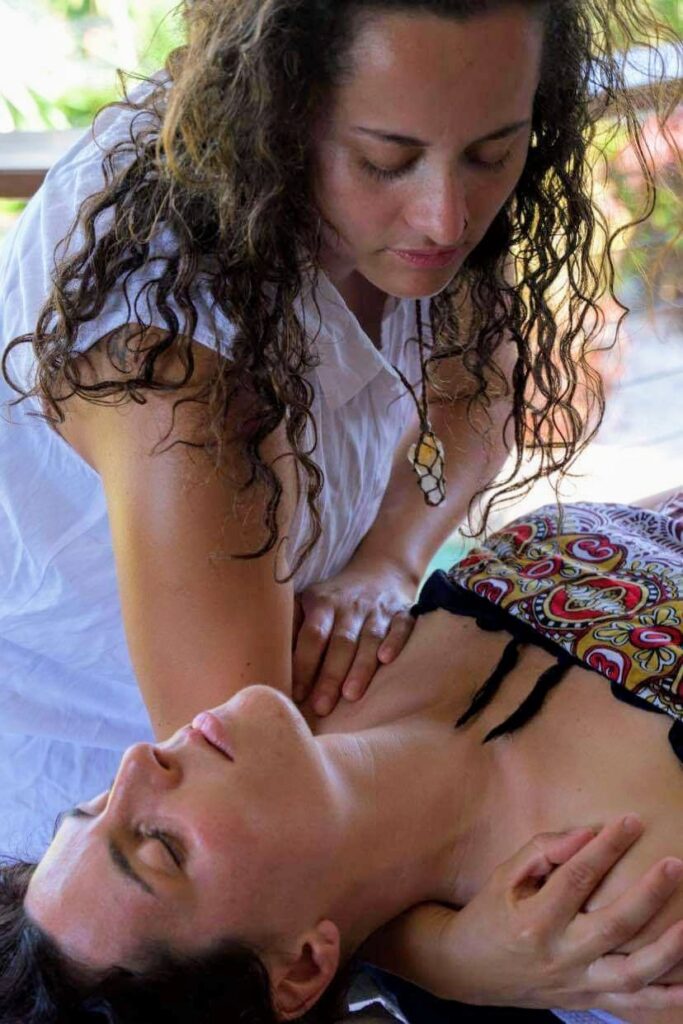
Book a pregnancy session.
Side-lying positioning, appropriate pressure, sessions shaped around the trimester. Sunshine Coast clinic at Valdora or mobile to your home. ANTA-registered.